
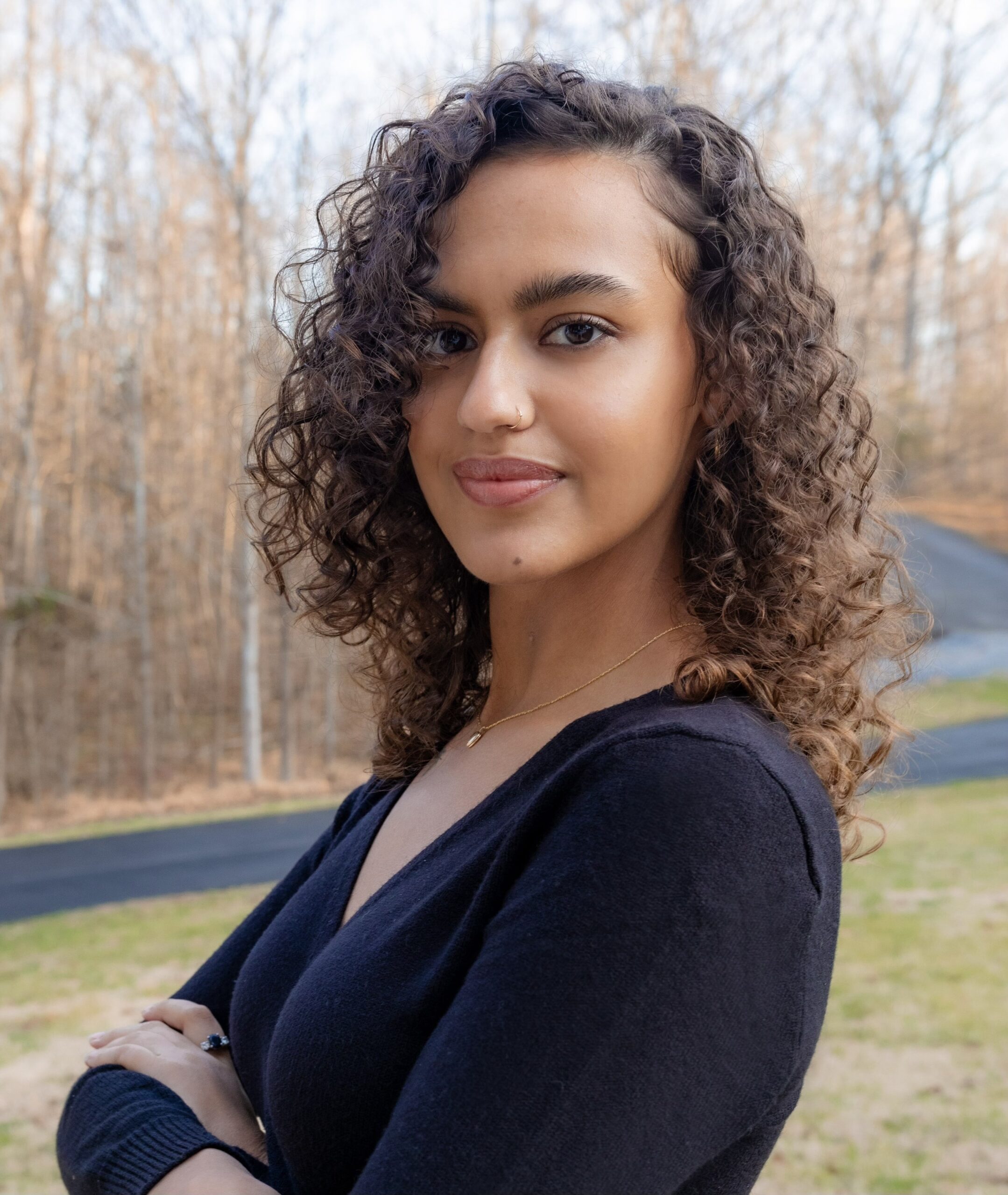
Zewde Ingram is a graduate student in the Hagedorn Lab at Boston University who received a CCEH travel award to attend the 2026 Society for Developmental Biology Northeast Regional Meeting (NESDB 2026)
Can you give us a summary of the research you presented?
Hematopoietic stem and progenitor cell (HSPC) niches are specialized microenvironments that support the development and self-renewal of HSPCs, which sustain lifelong production of blood and immune cells. Previously, our lab identified a conserved gene expression signature unique to hematopoietic niche endothelial cells that includes the scavenger receptors STAB1/2 and MRC1. The research I presented at NESDB 2026, investigates the role of endothelial-expressed STAB2 in the maintenance and regulation of HSPCs within the fetal hematopoietic niche in zebrafish.
What was the coolest thing that your learned at the meeting?
I was fascinated to learn just how important the expansion and recruitment of macrophages are in wound regeneration across species – from the zebrafish spinal cord to the axolotl tail. It was also really cool to learn about how many of the cell types we study in hematology, like macrophages, are conserved across diverse organisms yet the regenerative capacity among different species and tissues varies widely (often being minimal/limited in humans). It was also very interesting to learn how findings from such studies can be applied to the field of regenerative medicine for the benefit of human patients.
Outside of the research presentations, what else did you enjoy about the meeting?
During lunch the second day of the conference, the organizers set up ‘Mentoring Tables’ which provided trainees the opportunity to casually converse with post-docs and PIs with expertise on navigating different career paths in science. For instance, there was a table dedicated to learning how to acquire a post-doc and another about becoming a faculty member at a primarily undergraduate institution – both of which I am considering pursuing.
Do you have a favorite hematopoietic cell?
It is so hard to choose! I will be basic and say I love hematopoietic stem cells, not only because they are a focus of my research, but because of their unique self-renewing and multi-potent potential that, in the context of bone marrow transplantation, can save lives. It is truly a revolutionary procedure all made possible by these amazing cells!