
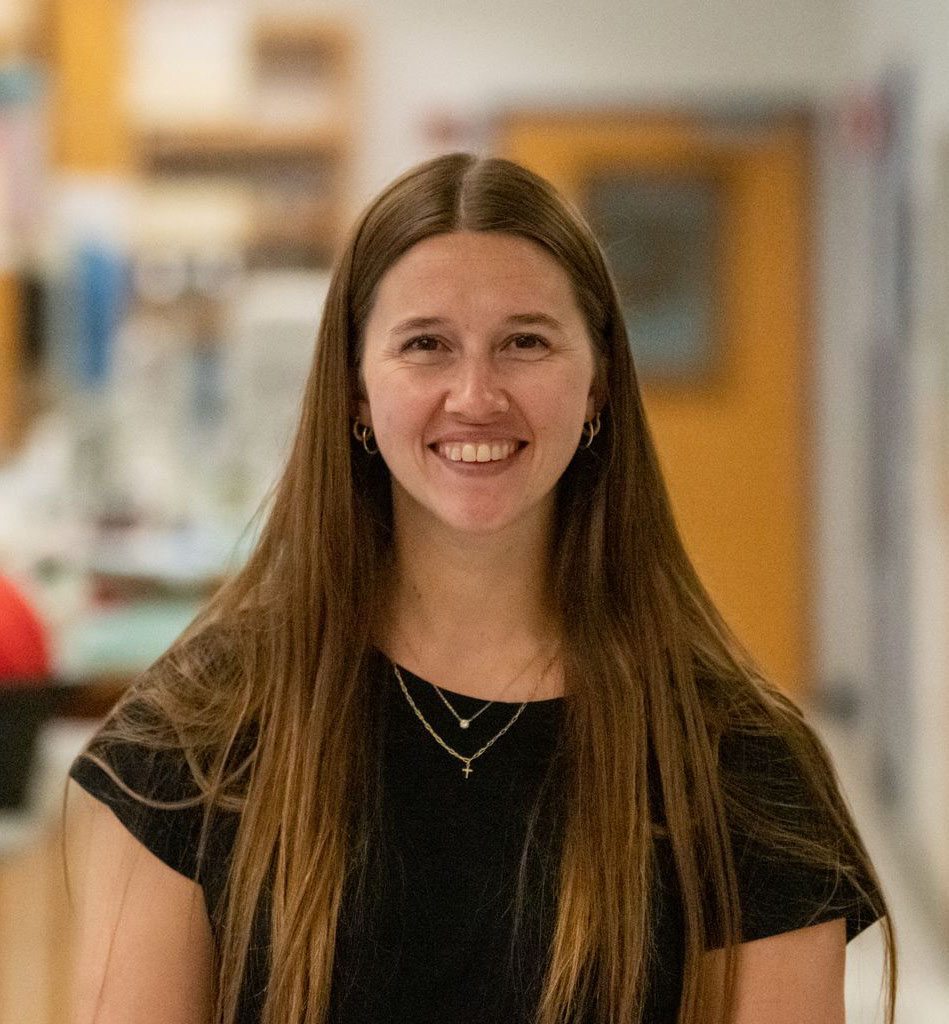
Maura Dodge is a graduate student in the Hagedorn Lab at Boston University who received a travel award from the CCEH to attend the 2026 Society for Developmental Biology Northeast Regional Meeting (NESDB 2026).
Can you give us a summary of the research you presented?
Ischemia is a condition where decreased blood flow reduces oxygen and nutrient delivery, which can lead to heart attack or stroke. For my dissertation work, I am investigating how oxygen-independent elements of blood flow, such as hemodynamic forces, regulate the hematopoietic stem and progenitor cell (HSPC) niche in zebrafish, exploiting a window of development whereby passive oxygen diffusion is sufficient for survival. At the 2026 NESDB conference, I presented findings showing that the absence of blood flow causes specific changes in endothelial gene expression in the HSPC niche. My findings have important implications for understanding how ischemia impacts the HSPC niche in conditions like sickle cell disease.
What was the coolest thing that your learned at the meeting?
One exciting topic I learned more about at this meeting was tissue-resident macrophage identity and dynamics. As our lab focuses on hematopoietic-supportive tissues, such as the bone marrow, I am interested in the role that macrophages play in these niche tissues, assisting in housing HSPCs and supporting hematopoiesis across development. At the NESDB meeting, I learned how transcriptionally distinct tissue resident macrophages contribute to the regulation of key developmental processes, with one talk defining the divergent spatiotemporal dynamics of tissue resident macrophages in the embryonic salivary gland, despite their co-occupation within the same niche.
Outside of the research presentations, what else did you enjoy about the meeting?
The NESDB meeting was unique in its design, where all attendees, senior PIs, postdocs, graduate students, and undergraduate students stayed onsite and took all of our meals together, allowing for more casual networking and conversation around mealtimes. Throughout the meeting there was a strong emphasis on trainee development, opening the doors for me to approach more seasoned PIs in hematology, which I appreciated as a more junior graduate student beginning to build connections. Further, being a local, Northeast regional meeting, I was able to interact with researchers from nearby universities, fostering future collaborations between our groups.
Do you have a favorite hematopoietic cell?
My favorite hematopoietic cell has to be the erythrocyte, or red blood cell. Their high turnover coupled with their ability to both deliver oxygen and remove carbon dioxide all while maintaining a remarkably flexible morphology makes them so unique and powerful as cells.